
The Maine Coon: America's Original Gentle Giant
- Why they are called "gentle giants" and one of the oldest natural breeds in North America.
- How European settlers and brutal New England winters shaped the breed.
- Why they remain the official state cat of Maine and one of the most popular breeds in the world.
The Maine Coon is the largest non-hybrid domesticated cat breed in the world and one of the oldest natural breeds in North America. Known for their impressive size, thick luxurious coats, and famously friendly personalities, Maine Coons have earned the nickname "gentle giants" for good reason. They're also one of the only cat breeds regularly described as "dog-like" — and once you live with one, you'll understand exactly why.
The breed's origin story is as colorful as the cats themselves. The most popular myth is that Maine Coons descended from crossbreeding between domestic cats and raccoons — a tale inspired by their bushy, ringed tails and the "Coon" in their name. A more romantic legend ties the breed to Marie Antoinette, who allegedly sent her prized Turkish Angora cats to America before her execution. The more likely truth is that longhaired cats brought by European settlers in the 1600s bred with local shorthaired cats, and over generations, New England's brutal winters naturally selected for the biggest, hardiest cats with the thickest coats — producing the magnificent breed we know today.
Maine Coons were among the first cats shown competitively in the United States, appearing at agricultural fairs and cat shows in New England as early as the 1860s. A brown tabby Maine Coon named Cosey won Best in Show at the first major North American cat show, held at Madison Square Garden in 1895 — a moment that cemented the breed's place in American cat fancy history. The breed's popularity dipped sharply in the early 1900s when exotic longhaired breeds like the Persian arrived from overseas, and the decline was so severe that the Maine Coon was even declared extinct in the 1950s. But dedicated breeders refused to let the breed disappear, and by the 1970s and 1980s the Maine Coon was once again gaining recognition and reclaiming its rightful place at the top.
Today, the Maine Coon is the official state cat of Maine and consistently ranks as the most popular cat breed in the world — a title that feels entirely deserved for a breed that has survived legend, near-extinction, and over a century of competition to come out on top. They are social without being demanding, playful without being destructive, and gentle without being timid — a combination that makes them one of the most universally loved breeds in the world. At Mindful Maine Coon Cattery, we breed for everything that makes this breed extraordinary: size, health, temperament, and that unmistakable Maine Coon presence.
Our Champion Bloodlines
- What champion bloodlines and WCF-registered pedigrees mean in practice.
- How conformation champions are judged against the official Maine Coon breed standard.
- Why titled lines and health testing give confidence in what your kitten will grow into.
Every breeding cat at Mindful Maine Coon Cattery comes from champion bloodlines. Our Kings and Queens carry World Cat Federation (WCF)-registered pedigrees with conformation champions throughout their lineage — cats that were evaluated by judges against the official Maine Coon breed standard and earned their titles based on physical structure, coat quality, and breed type.
Conformation titles mean the cats in our pedigrees weren't just beautiful — they were formally recognized as outstanding examples of the breed. When you see "CH" before a cat's name on a pedigree, that cat earned a Champion title by competing and winning at cat shows judged by breed experts. Several of our cats carry multiple generations of champions in their lines.
This matters because champion bloodlines give you confidence in what your kitten will grow into. Size, bone structure, ear set, muzzle shape, coat quality — these traits are genetic, and breeding from titled lines means our kittens inherit the physical qualities that define a true Maine Coon. Combined with our comprehensive health testing, champion pedigrees are how we ensure every kitten from Mindful Maine Coon Cattery looks, feels, and acts like the best of the breed.
Maine Coon Size and Physical Characteristics
- How a long, muscular, broad-chested body gives the breed its powerful look.
- When most Maine Coons reach full size, and what adult weight ranges look like.
- Which features define the breed, from tufted ears to a long, bushy tail and tufted paws.
Maine Coons are built unlike any other domestic cat. Their bodies are long, muscular, and broad-chested, with a rectangular shape that gives them a powerful, athletic look. They are slow to mature — most Maine Coons don't reach their full size until they are three to five years old, which means you get to watch your kitten grow into a truly majestic cat over several years.
Males typically weigh between 18 and 22 pounds, though some exceptional males can reach 25 pounds or more. Females are slightly smaller, generally ranging from 10 to 15 pounds — still significantly larger than the average domestic cat. From nose to tail tip, a fully grown Maine Coon can measure up to 40 inches in length.
Their physical features are just as distinctive as their size. Maine Coons are recognized by their large, tufted ears (often topped with lynx-like tips), wide-set expressive eyes, strong square muzzle, and a long, bushy tail they can wrap around their body for warmth. Their paws are large and tufted, originally serving as natural snowshoes in the snowy Maine wilderness.
Some Maine Coons are polydactyl, meaning they have extra toes on their paws. This trait traces back to the breed's earliest days and is recognized by TICA (The International Cat Association) as a distinct variety (Maine Coon Polydactyl).
Maine Coon Coat and Colors
- How a long, dense, water-resistant coat developed for harsh New England winters.
- Which colors and patterns define the breed, from classic tabby to smoke and tortoiseshell.
- Which colors and patterns are not accepted in the breed standard.
The Maine Coon's coat is one of the breed's most striking features. It's long, dense, and water-resistant — a trait developed over centuries to protect against the harsh winters of New England. The fur is shorter across the shoulders and longer on the stomach and hindquarters, creating a shaggy, natural look that gives the breed its wild, untamed appearance. Despite its length, the coat's silky texture makes it more manageable than many other longhaired breeds — and far less prone to the severe matting that plagues breeds like the Persian.
Maine Coons come in an extraordinary range of colors and patterns. Patterns include:
- Classic Tabby— bold, swirling whorls of color, one of the most iconic Maine Coon looks
- Mackerel Tabby— fine vertical stripes running down the body
- Smoke— a dark topcoat over a bright silver undercoat that creates a dramatic two-toned effect
- Shaded— a pale base coat with color tipping that shifts beautifully in different lighting
- Solid— one uniform color from root to tip
- Bi-color— two distinct colors, typically white combined with another
- Tortoiseshell— a complex mosaic of black, red, and cream, unique on every cat
The only colors and patterns not accepted in the breed standard are those suggesting crossbreeding — chocolate, lilac, and colorpoint (pointed) patterns like those seen in Siamese cats are not recognized.
At Mindful Maine Coons Cattery, our Kings and Queens represent some of the most beautiful and sought-after color varieties in the breed. Each one passes their stunning genetics on to their kittens:
Our Kings
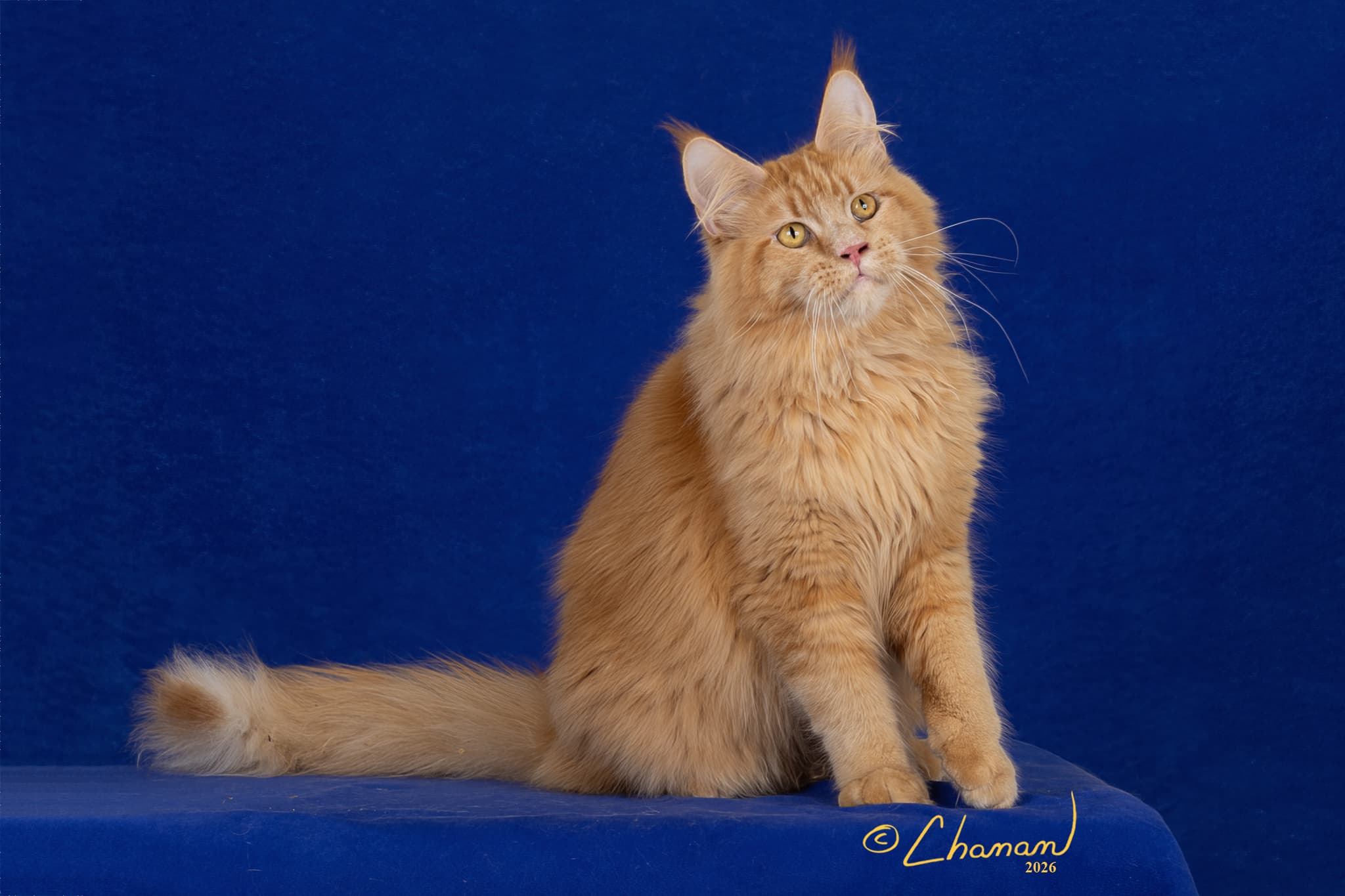
Yasha
Personality
A rich, burnished orange coat that catches the light beautifully. Red-orange Maine Coons are among the most visually striking of the breed, and Yasha's full, flowing coat is a perfect example.
Health Testing
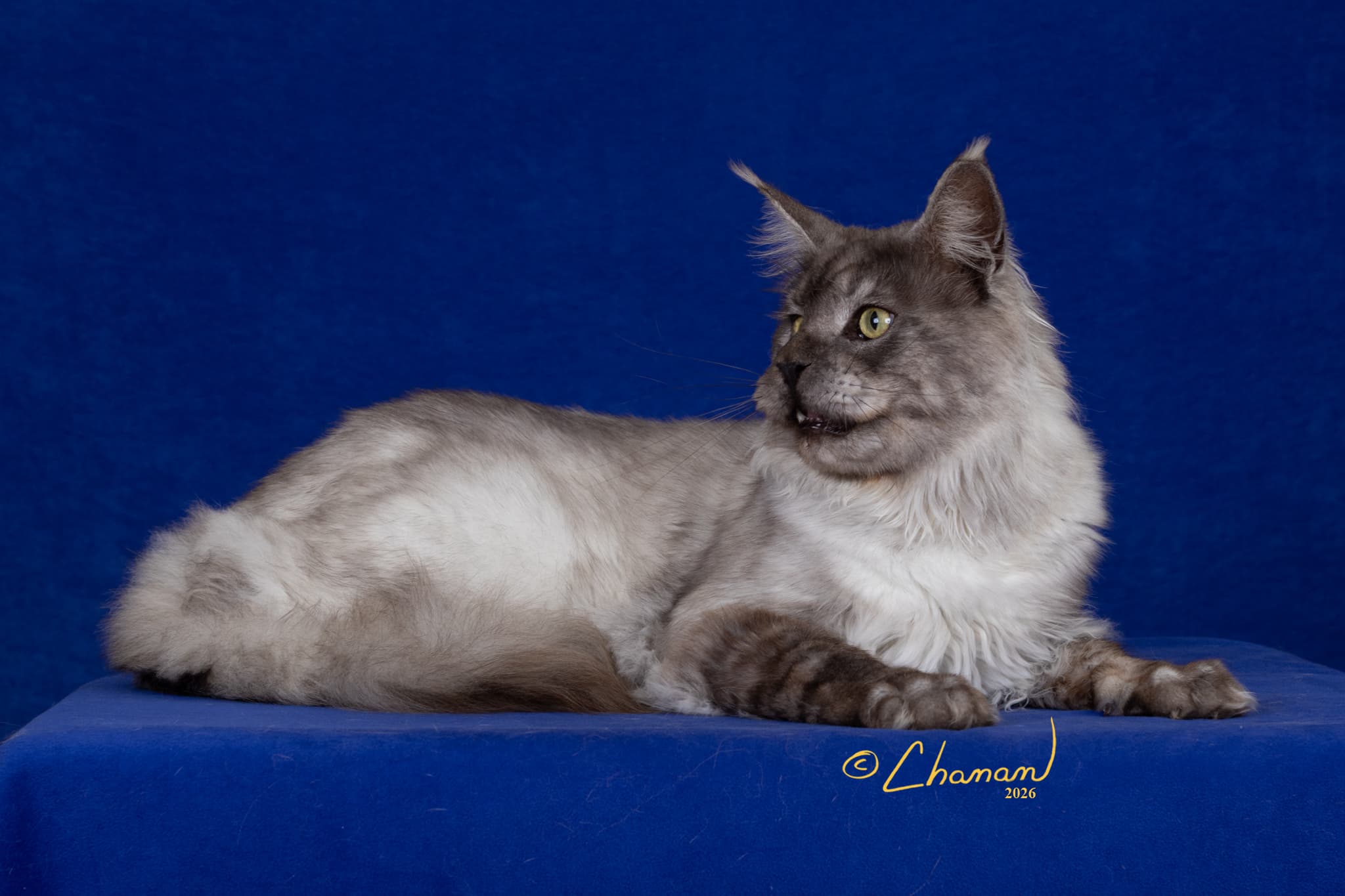
Koosh
Personality
Dark and dramatic on the surface, with a bright silver undercoat that reveals itself when the fur parts. One of the most eye-catching patterns in the entire breed.
Health Testing
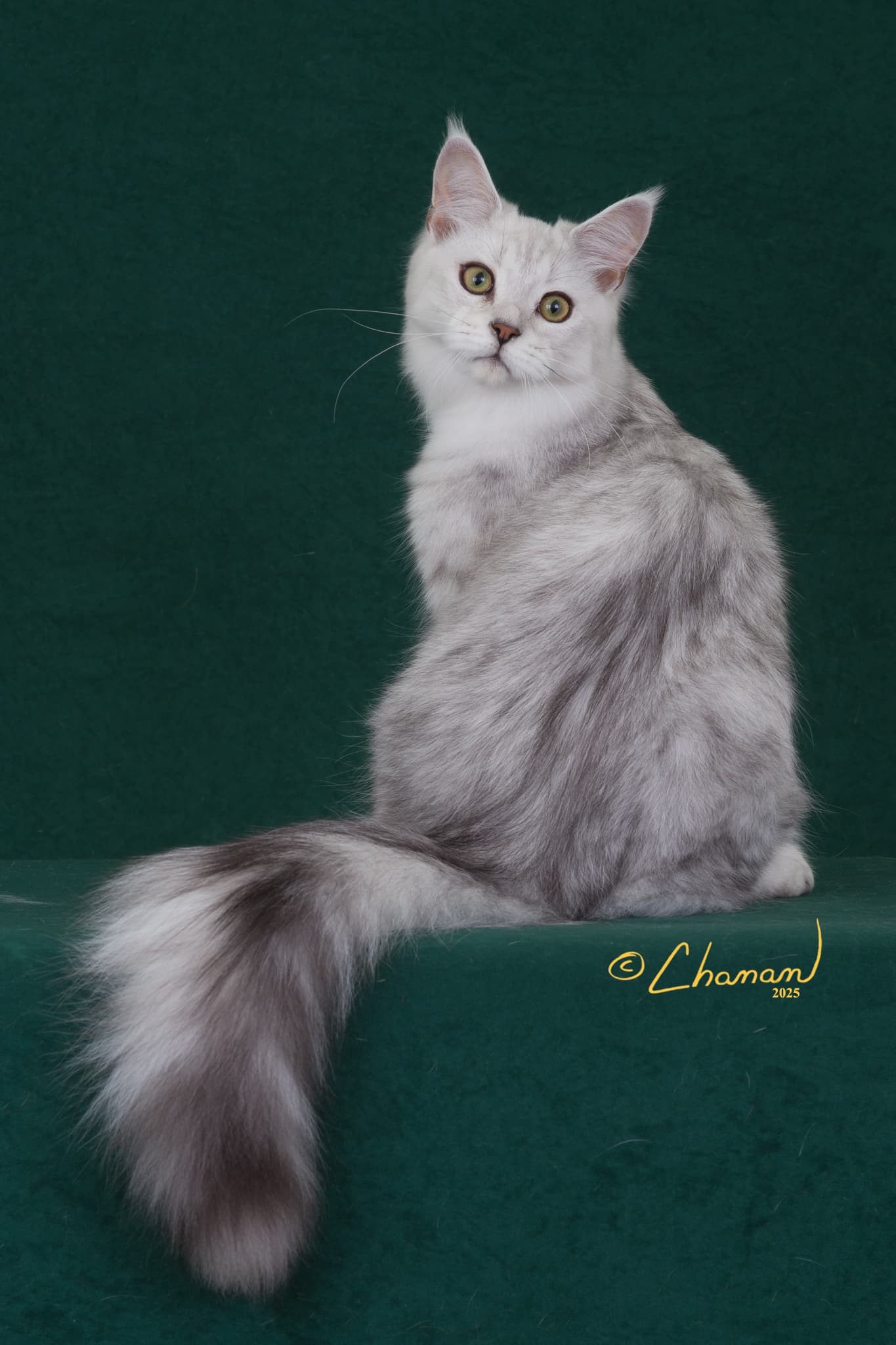
Weasel
Personality
A pale, ethereal silver base tipped with dark blue that shifts beautifully in different lighting. Soft, sophisticated, and endlessly striking.
Health Testing
Our Queens
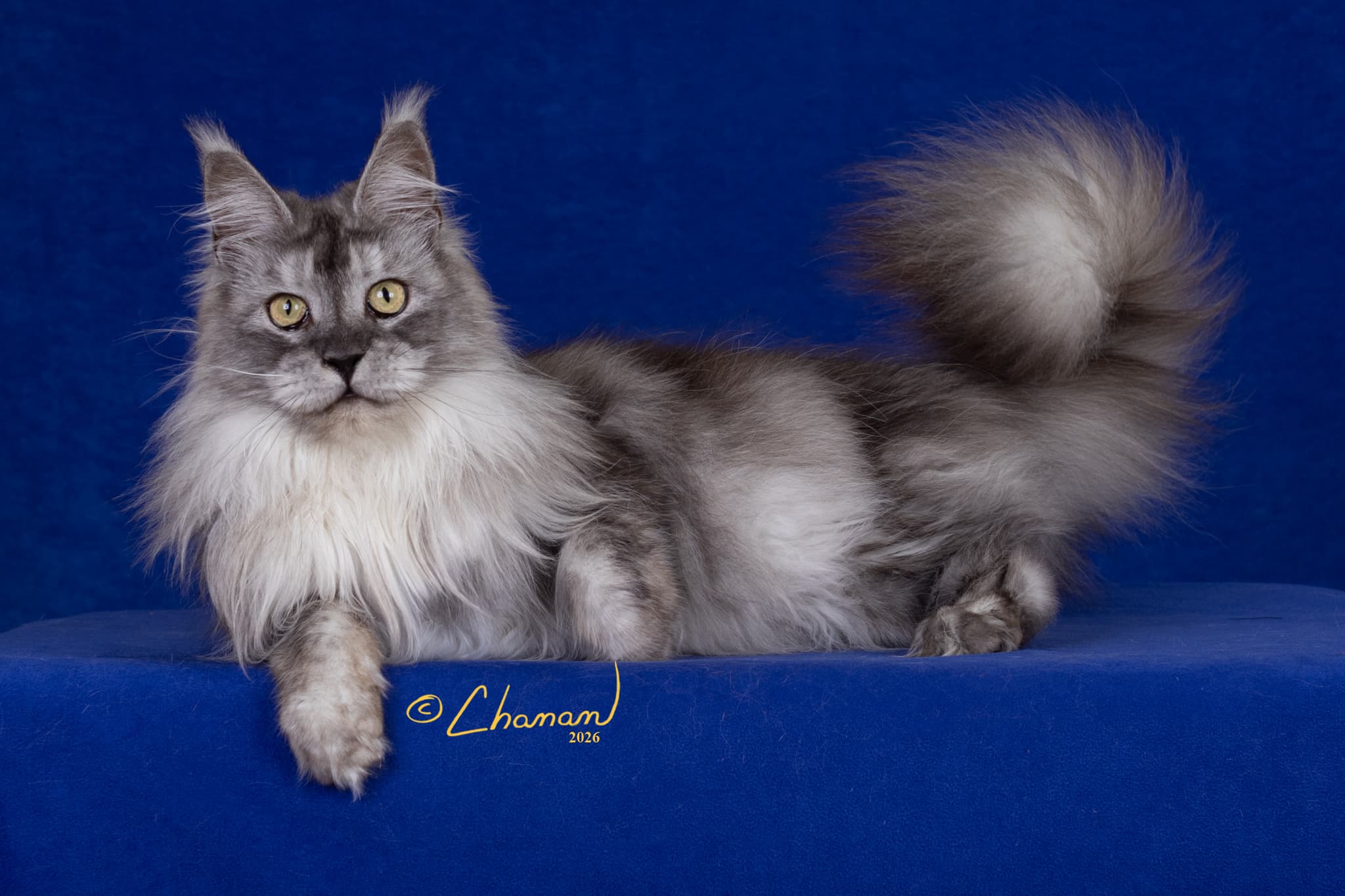
Onyx
Personality
The same dramatic two-toned depth as Koosh, with her own playful, affectionate personality.
Health Testing
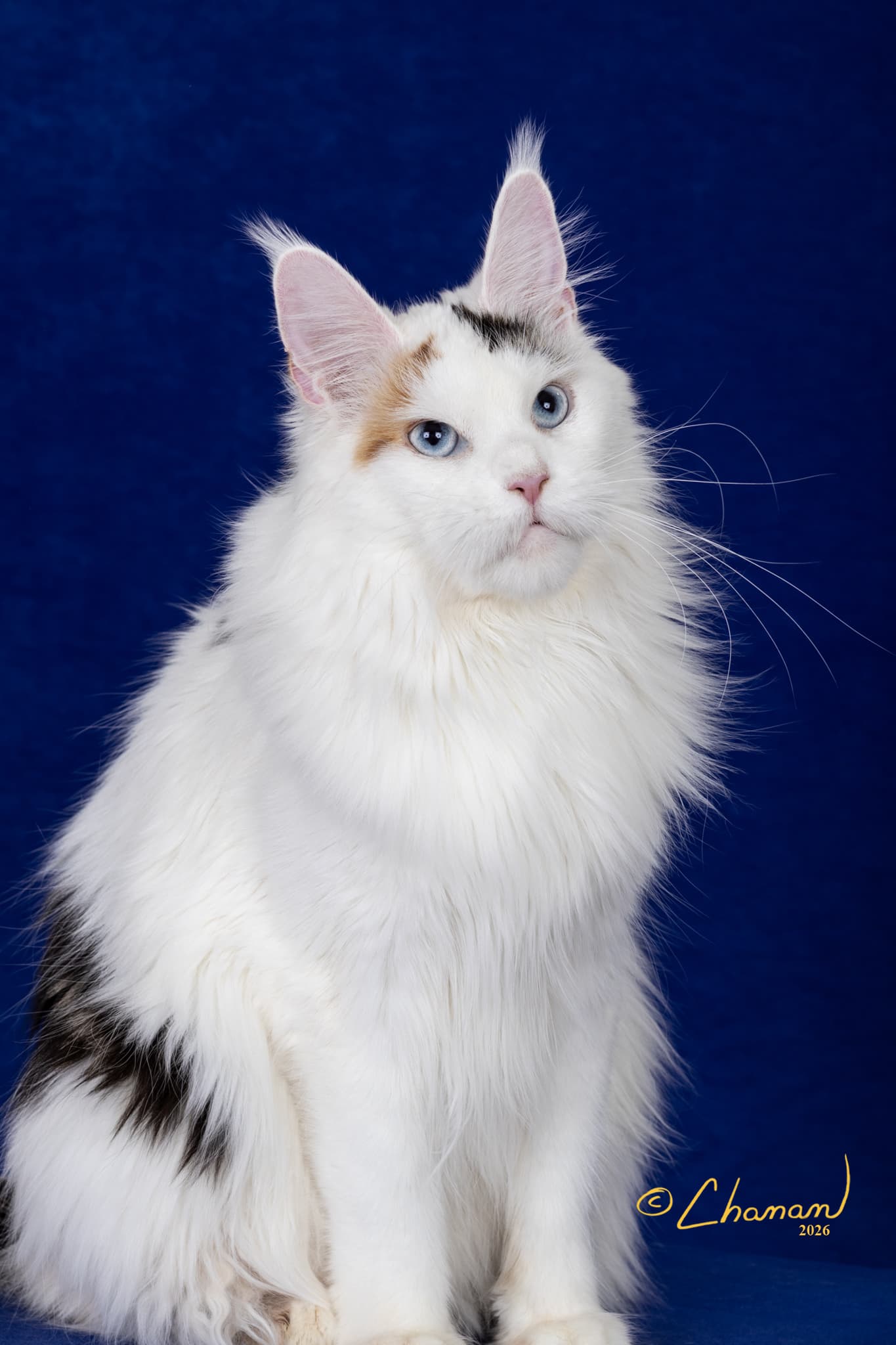
Gucci
Personality
A rare, visually complex mosaic of black, warm red, and crisp white that is never the same twice.
Health Testing
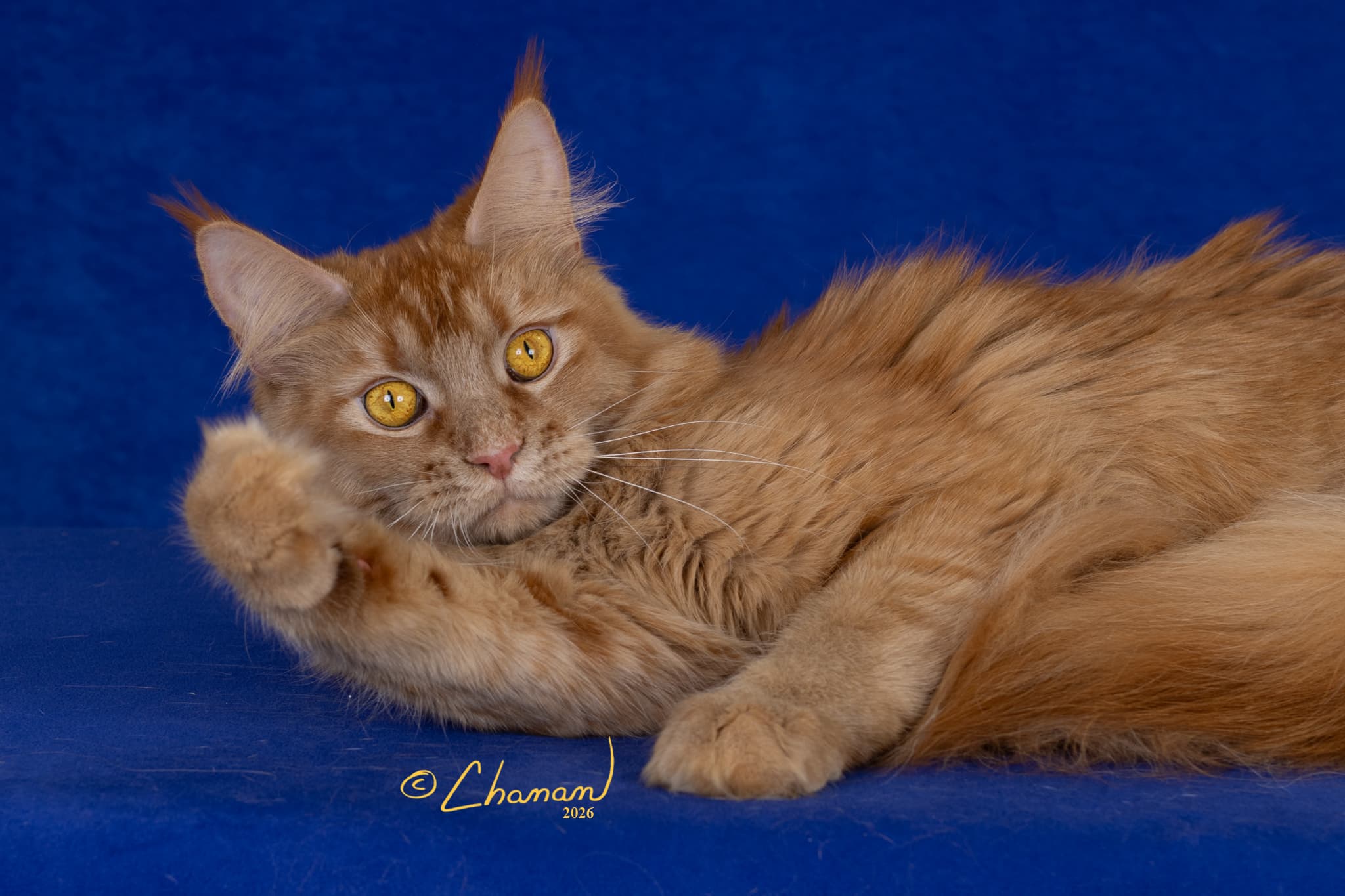
Lana
Personality
Rich, warm tones that mirror Yasha's, bringing that vivid red coloring to the maternal side of our program.
Health Testing
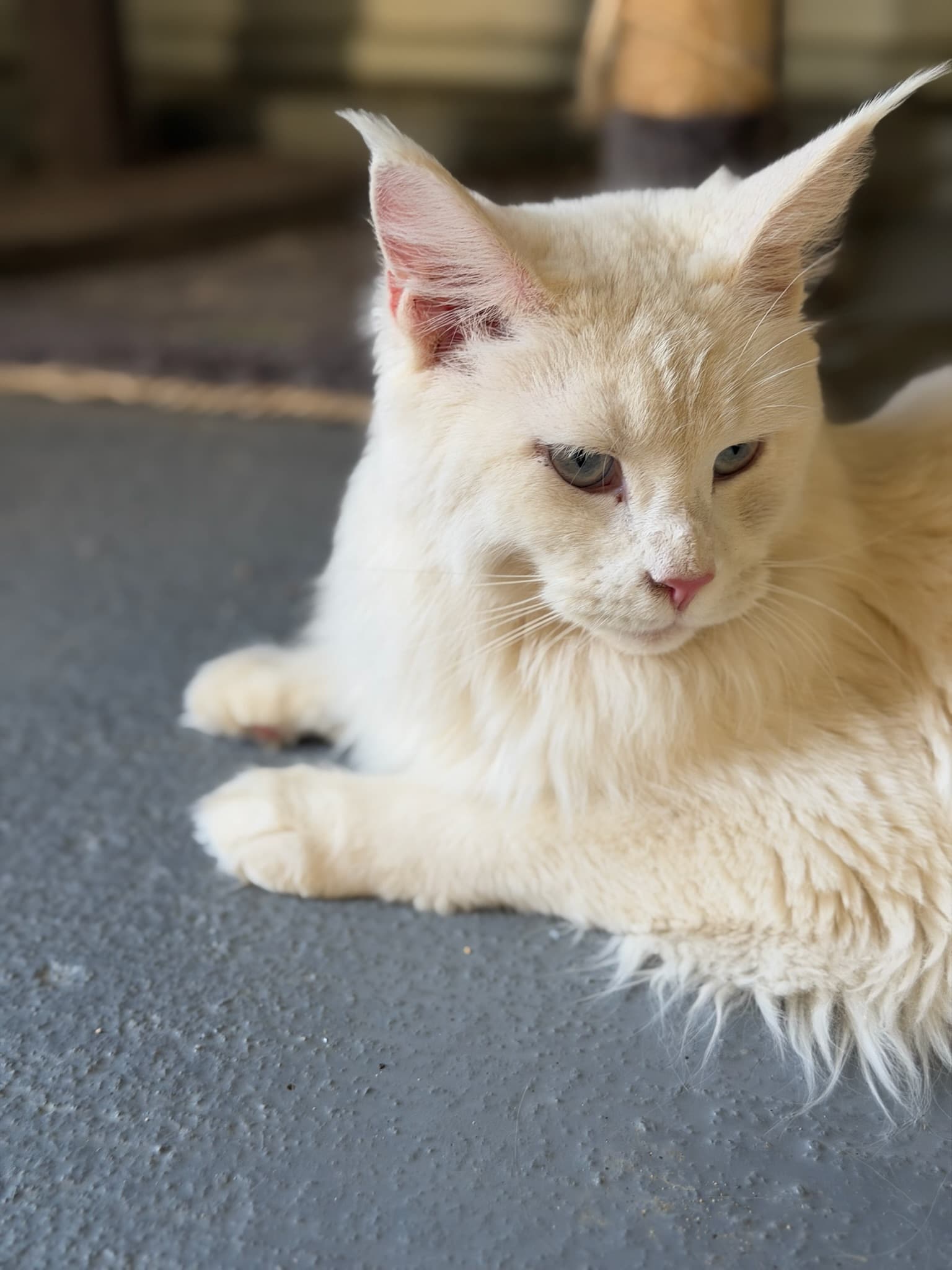
Snowball
Personality
Pure, clean, and breathtaking. White Maine Coons are among the most stunning of the breed, and Snowball is no exception.
Health Testing

Osya
Personality
Loving, cuddly, independent at times. Very vocal
Health Testing

Tiny
Personality
Loves talking in her sleep. Smart. Loves to chase our hairbands!
Health Testing

Paula
Personality
Loves people watching. Affectionate at times. Loves treats
Health Testing

Milly
Personality
Cuddly, affectionate, loves toes. And completely unaware of her size and loves knockings stuff over with her tail
Health Testing

Lily
Personality
Talkative when her name is called. Likes to be held like a baby
Health Testing

Anora
Personality
The ultimate cuddle monster, doesn't understand personal space. Great security guard
Health Testing

Raven
Personality
Loves to play with water. Loves to open and organize our drawers to her liking, aka all of our stuff is color coordinated...
Health Testing
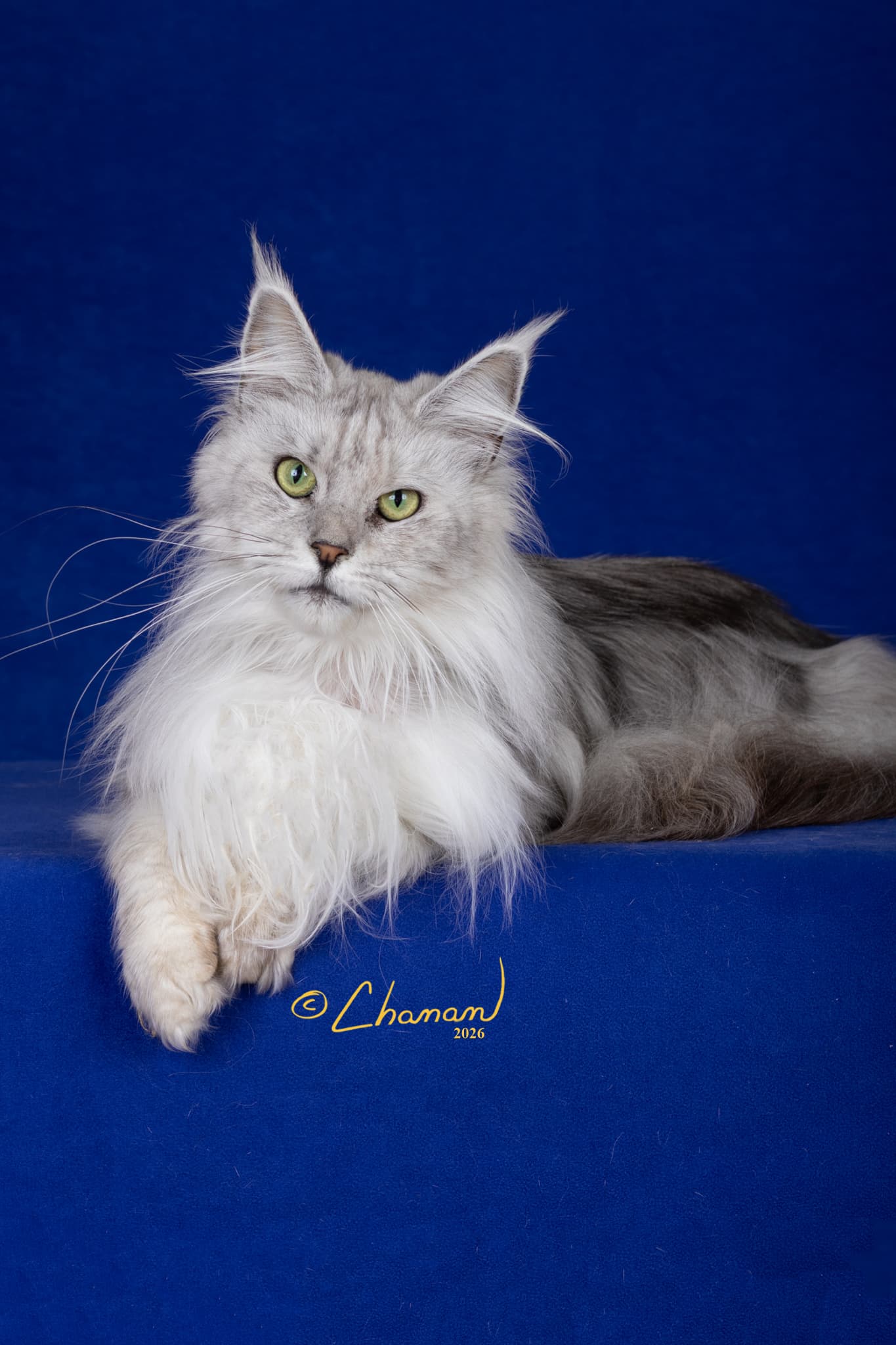
Diana
Personality
Diana is a calm and attentive mother with a naturally nurturing temperament. Her kittens are well-raised, affectionate, and confident.
🏵️ This cat is RETIRED
Maine Coon Personality and Temperament
- Why Maine Coons are called the "dogs of the cat world."
- How they show affection by staying close and following you around.
- What their chirps, trills, curiosity, and love of play feel like day to day.
If you've never lived with a Maine Coon, their personality is often the biggest surprise. These cats are regularly described as "dogs of the cat world," and for good reason. They follow their owners from room to room, greet you at the door, and genuinely want to be involved in whatever you're doing. Many Maine Coons learn to play fetch, respond to their names, and even walk on a leash.
Despite their enormous size, Maine Coons are gentle, patient, and remarkably good-natured. They're one of the best cat breeds for families with children, and they typically get along well with other cats and even dogs. They are social without being demanding — happy to sit beside you while you work rather than insisting on being in your lap (though some absolutely will claim your lap, all 20-plus pounds of them). If you're expecting a cat who sits in your lap nonstop, a Maine Coon may surprise you — they show affection by staying close and following you around rather than curling up on top of you. Most owners find this companionship style even more endearing than lap-sitting once they experience it.
One of the most charming traits of the Maine Coon is their voice. Rather than the typical meow, Maine Coons are known for their distinctive chirps and trills — soft, musical sounds they use to communicate with their people. They're talkative cats, but not in a loud or grating way. Think gentle conversation, not yelling. It's one of those things that Maine Coon owners never stop talking about once they've experienced it.
Maine Coons are also highly intelligent and curious. They enjoy puzzle toys, interactive play, and figuring things out. Some owners describe them as mischievous in the most endearing way — they'll figure out how to open doors, turn on faucets, and find creative ways to get your attention. Many also love water, which is unusual for cats. Don't be surprised if yours tries to join you in the shower or plays in their water bowl.
Living With a Maine Coon
- How Maine Coons adapt from apartments to large homes when they have room to stretch and play.
- Why oversized cat trees, extra-large litter boxes, and large carriers make daily life easier.
- Why companionship matters, especially if you work away from home full-time.
One of the most common concerns about Maine Coons is their size — and whether your home can handle it. The truth is, Maine Coons adapt well to a variety of living situations, from apartments to large homes, as long as they have enough space to stretch out and play. They're not as high-energy or destructive as their size might suggest. Most Maine Coons are calm, deliberate movers who are surprisingly graceful for their weight. They're far more likely to be lounging on a window perch than tearing through the house.
That said, they do benefit from sturdy, oversized cat trees and scratching posts. Standard cat furniture can feel too small for a full-grown Maine Coon, so investing in large-breed cat furniture is a smart move. You'll also want an extra-large litter box — standard sizes won't cut it — and a carrier rated for large cats for vet visits and travel.
They're active cats who enjoy playtime but aren't hyperactive. A couple of interactive play sessions each day — feather wands, chase toys, laser pointers — will keep them happy and healthy. They also appreciate having a window perch where they can watch birds and squirrels.
Maine Coons thrive on companionship. They do well in households where someone is home for at least part of the day, or where they have a feline companion to keep them company. Their "dog-like" attachment to their people means they don't do well with long periods of isolation. If you work away from home full-time, a second cat — Maine Coon or otherwise — makes a big difference. A pair of Maine Coons will entertain each other, reduce boredom-related behavior, and actually make ownership easier, not harder.
Maine Coon Grooming and Care
- Why their silky coats are more manageable than most people expect.
- How brushing two to three times a week helps prevent mats in the belly and hindquarters.
- What standard maintenance includes beyond coat care: nails, teeth, and ear checks.
Grooming is one of the most common concerns people have about Maine Coons — and honestly, it's more manageable than most people expect. Their coats resist matting better than many other longhaired breeds thanks to their silky texture, and unlike breeds like Persians, they don't require daily brushing to avoid serious tangles.
A thorough brushing two to three times a week is recommended. Pay particular attention to the belly and hindquarters, where matting is most likely to occur. Most Maine Coon owners find that a 10-minute brushing session becomes a bonding routine their cat looks forward to — many Maine Coons will actually seek you out when it's grooming time.
Maine Coons do shed, and they shed noticeably during seasonal changes in spring and fall. A good deshedding brush and more frequent brushing during those periods will keep loose fur under control. A lint roller near the couch doesn't hurt either. But shedding is a reality with any cat — Maine Coons just have more fur to go around. The tradeoff for that gorgeous, lion-like coat is a little extra upkeep, and most owners agree it's well worth it.
Bathing is generally needed only occasionally — when the coat starts to look oily or feel clumpy. Most Maine Coons tolerate (and some even enjoy) baths, especially if introduced to water early. Their love of water actually makes bath time easier than with most cats.
Beyond coat care, standard maintenance includes regular nail trimming, dental care, and ear checks. Maine Coons' large, tufted ears can occasionally trap debris, so a quick check during grooming sessions is a good habit.
Grooming for Cat Shows
- Why show cats are bathed one to two days before the event, not the day of.
- What show-specific shampoos, blow drying, and brushing in sections are meant to do.
- Why no scissoring or coat alteration is allowed in the show ring.
If you're planning to show your Maine Coon — or if you've purchased a kitten from champion bloodlines and want to explore the show world — grooming requirements go a step further. Show presentation is an art form, and a Maine Coon in the ring is expected to look like the very best version of the breed. Here's what that takes:
- Bathing before every show — Show cats are typically bathed one to two days before the event, not the day of. Bathing too close to the show can leave the coat looking flat or stringy. Washing a day or two ahead gives the coat time to recover its natural volume and texture.
- Show-specific shampoos and conditioners — Regular pet shampoos won't cut it for the show ring. Most exhibitors use volumizing or clarifying shampoos designed for longhaired cats, followed by a lightweight conditioner that adds shine without weighing the coat down. Some also use a finishing spray or coat enhancer to add polish before judging.
- Blow drying and brushing technique — After bathing, the coat should be blow-dried on a low heat setting while being brushed out in sections. This lifts the coat and gives it that full, voluminous appearance that makes a Maine Coon look truly majestic on the judging table.
- Ear cleaning— Judges handle every cat and examine them closely. Ears should be spotlessly clean, with no wax or debris visible. A gentle ear cleaning solution applied with a cotton ball does the job.
- Nail trimming— Nails must be trimmed before every show — both for the safety of the judges who handle the cats and as a basic presentation requirement.
- Paw tufts and ruff grooming — The long tufts between the toes and the impressive ruff around the neck are key features judges look for in Maine Coons. These areas should be brushed out fully to show their natural length and volume. Never trim these — they are a defining feature of the breed.
- No scissoring or coat alteration— Unlike some breeds, Maine Coons are shown in their natural coat. Trimming, thinning, or altering the coat in any way is against show rules and can result in disqualification.
- Conditioning year-round — Show cats don't just look good the week of a show. Maintaining coat health year-round through regular brushing, a high-quality diet, and proper hydration is what produces a coat that truly shines under show lighting.
At Mindful Maine Coons Cattery, our breeding cats come from champion bloodlines and are raised with the coat care and conditioning that show-quality Maine Coons require. Whether you're buying a pet or a future show cat, that foundation makes a difference you can see and feel from the very first day your kitten comes home.
Maine Coon Health and Lifespan
- Which health conditions responsible breeders test for before producing kittens.
- Why DNA testing, cardiac ultrasounds, and hip X-rays matter for Maine Coons.
- How health-tested lines and BasePaws screening reduce risk and protect long-term health.
The average Maine Coon lifespan is approximately 12 to 15 years, and many indoor Maine Coons with proper care live well into their mid-to-late teens. Like all breeds, Maine Coons can be predisposed to certain health conditions — this is one of the most common concerns prospective owners have, and it's a valid one. But the key takeaway is this: the vast majority of these conditions are screenable, and buying from a breeder who does comprehensive health testing dramatically reduces your risk.
Here are the conditions responsible breeders test for:
Hypertrophic Cardiomyopathy (HCM): The most common form of heart disease in cats, HCM causes thickening of the heart muscle. Maine Coons can carry a genetic mutation that predisposes them to this condition. Responsible breeders screen for HCM through both DNA testing and cardiac ultrasounds. Buying from a breeder who screens for HCM — rather than skipping this step — is one of the single biggest things you can do to protect your future cat's health.
Hip Dysplasia: More commonly associated with dogs, hip dysplasia can also affect Maine Coons due to their large size. It occurs when the hip joint doesn't develop properly, which can lead to discomfort or mobility issues. Screening through hip X-rays helps identify this condition in breeding cats.
Spinal Muscular Atrophy (SMA): A genetic condition that affects the skeletal muscles. Cats with SMA may develop muscle weakness and an unusual gait. DNA testing can identify carriers and prevent affected kittens from being born.
Polycystic Kidney Disease (PKD): While PKD is more commonly associated with Persian breeds, renal cysts have been observed in a small number of Maine Coons. Research suggests these cysts differ from Persian-type PKD and are not linked to the same genetic mutation, but responsible breeders still screen for kidney health as a precaution.
It's also worth noting that Maine Coons from health-tested lines tend to have significantly fewer issues than those from unscreened parents. The upfront investment in a kitten from a responsible breeder who does thorough genetic and health screening often saves thousands in veterinary costs down the road — and more importantly, saves you and your cat from preventable heartbreak.
At Mindful Maine Coons Cattery, every breeding cat is tested through BasePaws for a comprehensive genetic health panel. We also work closely with our veterinarian to ensure our cats receive regular cardiac screening and overall health assessments. Our goal is to produce kittens from the healthiest possible parents, giving your new family member the best start in life.
Why Are Maine Coons So Popular?
- Why they rank among the top three most popular cat breeds in the United States.
- How they offer the loyalty and companionship of a dog without outdoor walks.
- Why their size, presence, and versatility broaden their appeal.
Maine Coons have surged in popularity over the past decade, and it's not hard to see why. They consistently rank as one of the top three most popular cat breeds in the United States — and in many years, they hold the number one spot. Social media has played a huge role in their rise. Videos of Maine Coons playing fetch, chirping at birds, walking on leashes, and dwarfing their owners have gone viral again and again, introducing millions of people to the breed for the first time.
But the popularity goes deeper than internet fame. Maine Coons fill a gap that no other cat breed quite covers. For people who love the loyalty and companionship of a dog but want a pet that doesn't need outdoor walks or constant supervision, the Maine Coon is the perfect middle ground. They bond deeply with their people without needing to be walked three times a day or let outside every few hours.
Their size is a major draw as well. There's something undeniably impressive about a 20-pound cat with a flowing mane stretched out to over three feet from nose to tail lounging on your couch. Maine Coons have a presence that other cats simply don't, and for many owners, that "wow factor" is a big part of the appeal.
The breed's versatility is also a factor. Maine Coons do well in apartments, houses, warm climates, cold climates, busy households, and quieter homes. They work for families with children, multi-pet households, first-time cat owners, and longtime cat people alike. They're adaptable in a way that broadens their appeal far beyond the typical "cat person" audience.
European vs. American Maine Coons
- How European Maine Coons differ in muzzle, ears, bone structure, and overall presence.
- How American Maine Coons keep a softer, more refined version of the breed.
- Why our program is built on premium European bloodlines.
If you've been researching Maine Coons, you may have come across the terms "European Maine Coon" and "American Maine Coon." While they are the same breed, there are noticeable differences in appearance that come from different breeding philosophies on either side of the Atlantic.
European Maine Coons tend to have a more wild, rugged appearance. Their muzzles are stronger and more square, their ears are taller with more pronounced lynx tips, and their overall bone structure is heavier. They often have higher cheekbones, more almond-shaped eyes, and a commanding presence that gives them an almost feral look.
American Maine Coons typically have a softer, more refined appearance. Their features are gentler, with rounder eyes and a less extreme facial structure. They stay true to the breed's New England heritage and the original look that made the breed famous in early American cat shows.
At Mindful Maine Coons Cattery, our breeding program is built on premium European bloodlines. We love the striking, majestic look that European lines bring to the breed — strong muzzles, tall ears with dramatic lynx tips, and impressive size. All of our breeding cats are TICA (The International Cat Association) and CFA (Cat Fanciers' Association) registered.
Is a Maine Coon Right for You?
- How to judge whether a Maine Coon is the right fit for your lifestyle.
- What makes the breed a strong match for families, other pets, and long-term companionship.
- What to plan for in grooming, household fit, and the costs of caring for a large-breed cat.
Maine Coons are an incredible breed, but they're not for everyone. Before bringing one home, it's worth honestly considering whether a Maine Coon is the right fit for your lifestyle.
A Maine Coon might be perfect for you if:
You want a cat who acts more like a companion than a roommate. You have the time for regular grooming and interactive play. Your household includes children, other cats, or dogs — Maine Coons adapt well to all of the above. You have the space (and the sturdy furniture) for a large-breed cat. And you're looking for a long-term commitment — Maine Coons live 12 to 15 years or more.
A Maine Coon might not be the best fit if:
You prefer an independent cat who doesn't need much interaction. You're away from home for long stretches without another pet for companionship. Or you're looking for a hypoallergenic breed — Maine Coons shed and are not considered hypoallergenic. If anyone in your household has cat allergies, spend time around Maine Coons before committing. Some allergy sufferers do fine with them, but their thick double coats can hold more allergens than shorthaired breeds.
A note on cost: Maine Coons are a financial commitment beyond the initial purchase price. They eat more than average-sized cats, need larger supplies (litter boxes, carriers, cat trees), and benefit from pet insurance given the breed's predisposition to certain health conditions. None of this is unmanageable, but it's important to go in with eyes open. The owners who are happiest with their Maine Coons are the ones who planned for these realities rather than being surprised by them.
Why Choose Mindful Maine Coons Cattery?
- How European champion bloodlines and BasePaws testing shape our breeding program.
- How kittens are raised underfoot, handled daily, and socialized with children and other pets.
- Why we stand behind every kitten with lifetime breeder support.
At Mindful Maine Coons Cattery, we're passionate about producing healthy, well-socialized kittens that represent the very best of this remarkable breed. Our breeding program is built on European champion bloodlines, comprehensive health testing through BasePaws, and a deep commitment to raising every kitten in a loving home environment.
Every kitten from Mindful Maine Coons Cattery is raised underfoot in our Murrieta, California home, handled daily from birth, and socialized with children and other pets. They leave us confident, friendly, and ready to become the centerpiece of your family.
We're TICA and CFA registered, and we stand behind every kitten with lifetime breeder support. Based in Murrieta, California, we ship to families across the United States and internationally. No matter where you are, we'd love to help you find your perfect Maine Coon.
Frequently Asked Questions
How big do Maine Coons get?▼
Males reach 18–22 lbs (some past 25), females 10–15 lbs. Length nose-to-tail can reach 40 inches. They mature slowly over 3–5 years.
Read full answerHow long do Maine Coon cats live?▼
Most Maine Coons live 12–15 years, with indoor cats frequently reaching their late teens.
Read full answerAre Maine Coons good with kids and other pets?▼
Yes — Maine Coons are famously gentle and patient, making them one of the best breeds for families with children. They also get along well with dogs and other cats.
Read full answerAre Maine Coons high maintenance?▼
No — their silky coat resists matting. Two to three brushing sessions per week, nail trims, and standard vet care are the main commitments.
Read full answerWhat is the difference between European and American Maine Coons?▼
European lines have a more wild, powerful look (bigger ears, stronger jaw, heavier build). American lines are softer and more classic.
Read full answerAre Maine Coons hypoallergenic?▼
No — no cat breed is truly hypoallergenic. Maine Coons' thick double coats can be challenging for allergy sufferers.
Read full answer